Perfume Ad Examples
Browse AI-generated perfume ad examples for fragrance brands. Evocative creatives that capture scent stories and drive discovery for new launches.
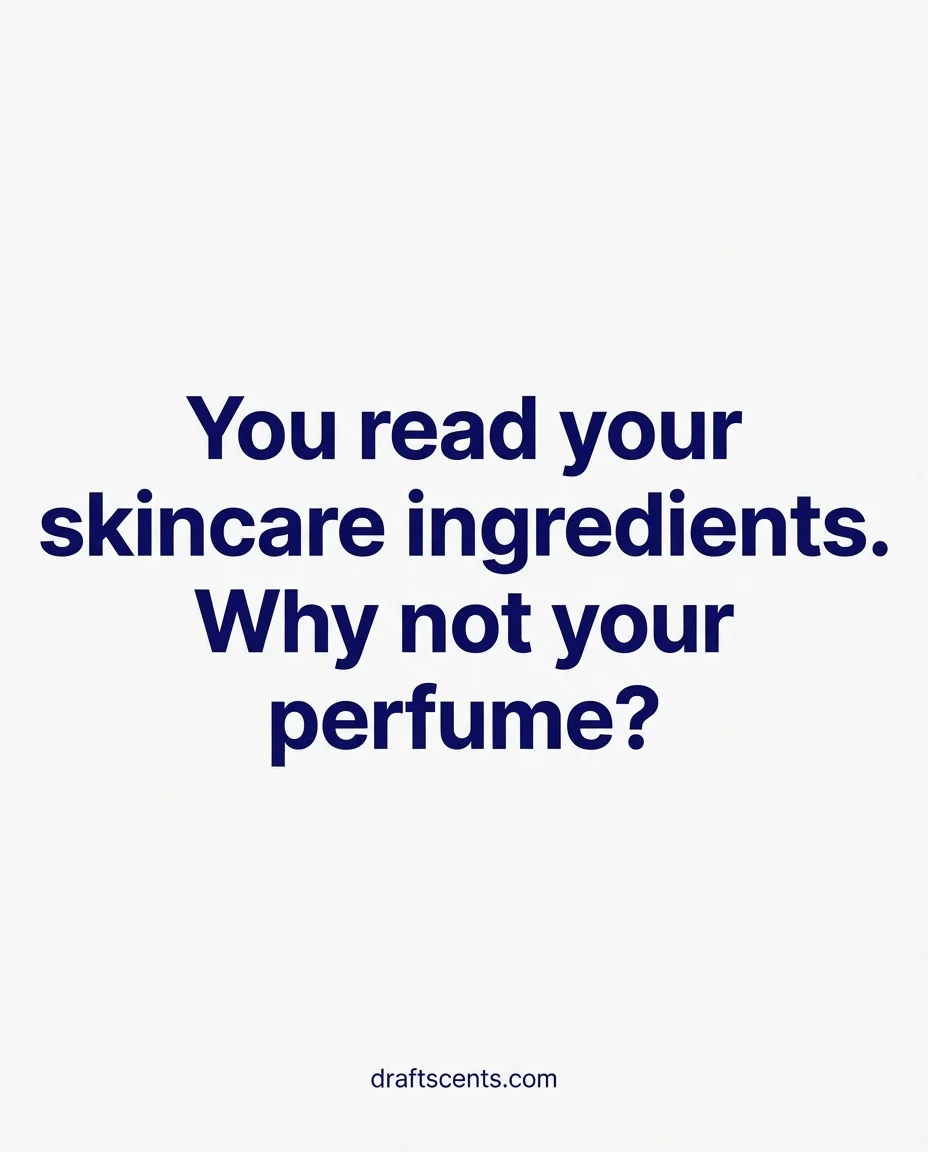
“You read your skincare ingredients. Why not your perfume?”
DRAFT
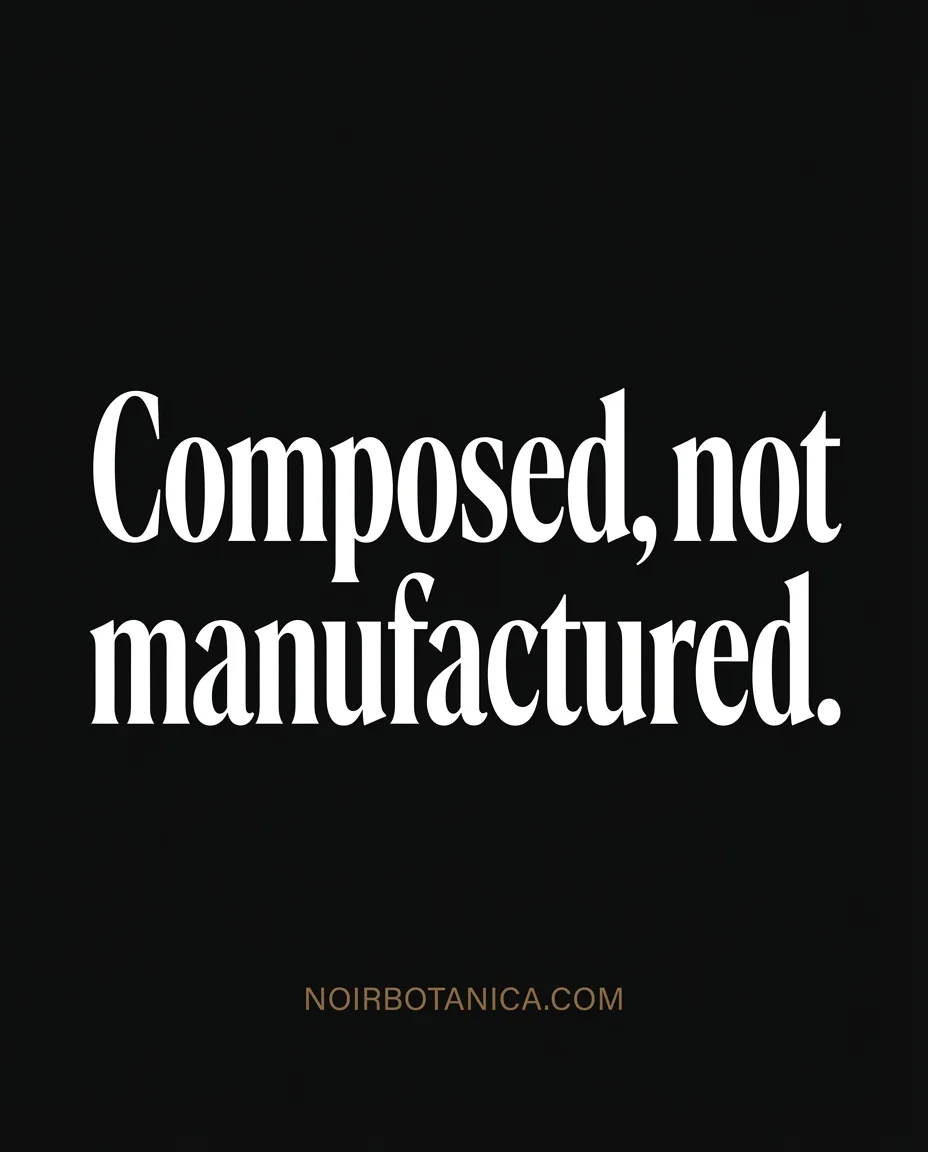
“You don't wear perfume. You wear fragrance.”
Noir Botanica
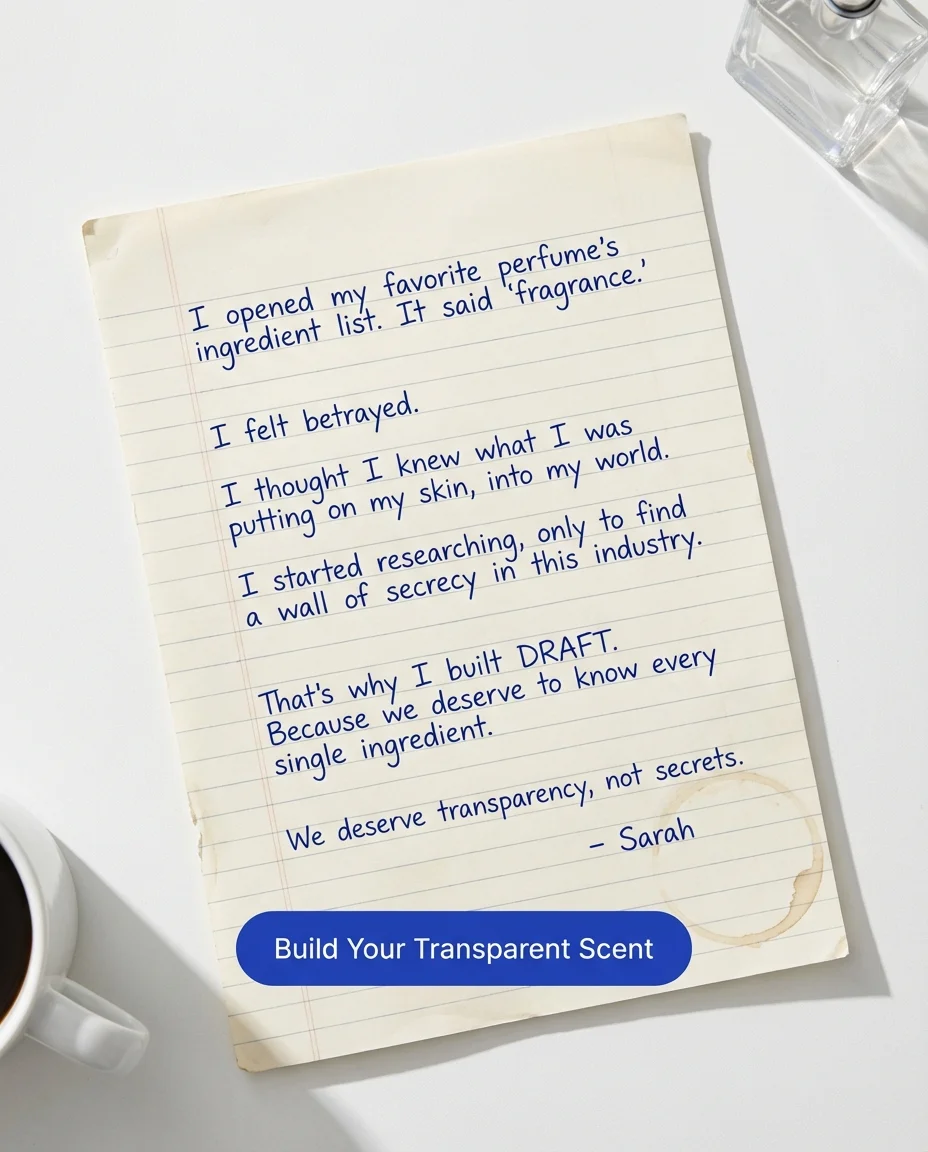
“I opened my favorite perfume's ingredient list. It said 'fragrance.'”
DRAFT
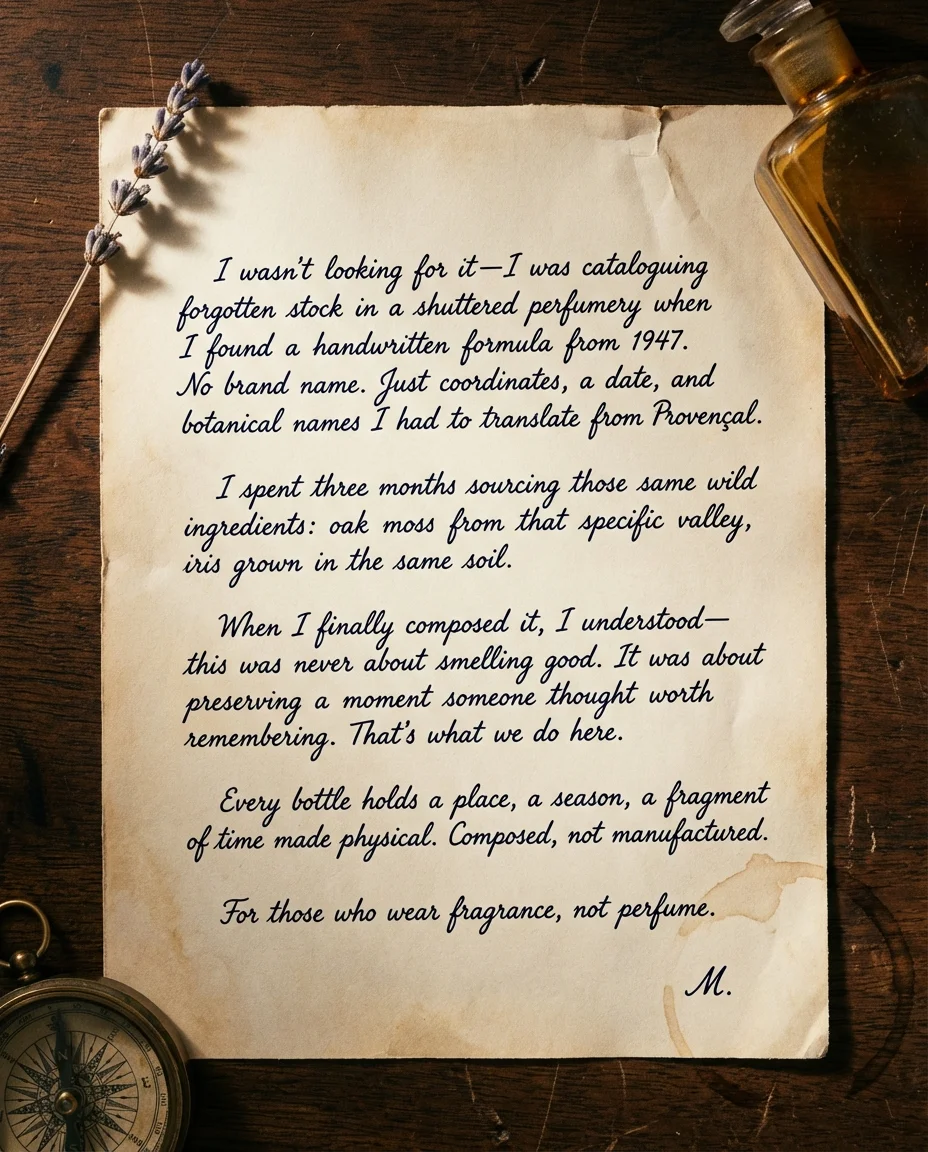
“This is the scent that changed everything.”
Noir Botanica
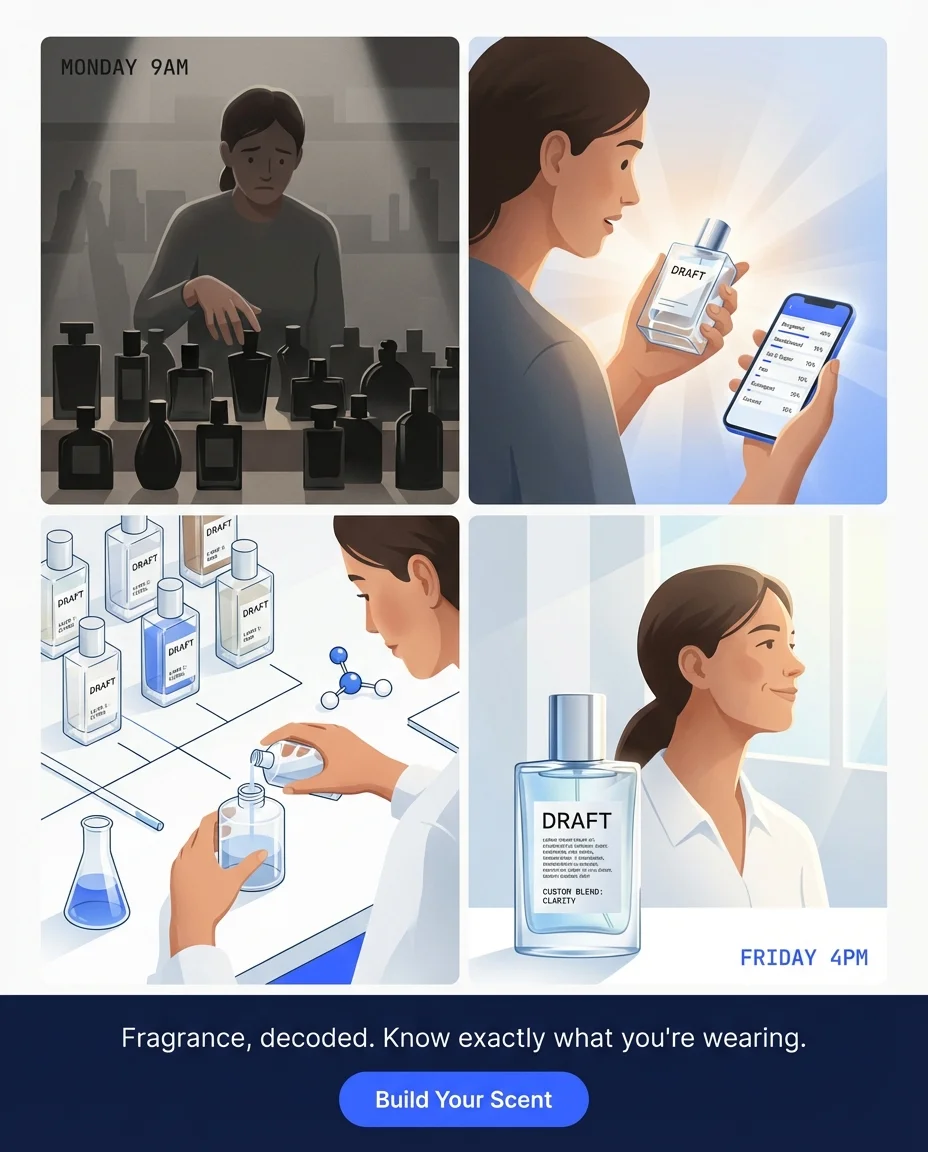
“This is what clean fragrance actually looks like.”
DRAFT
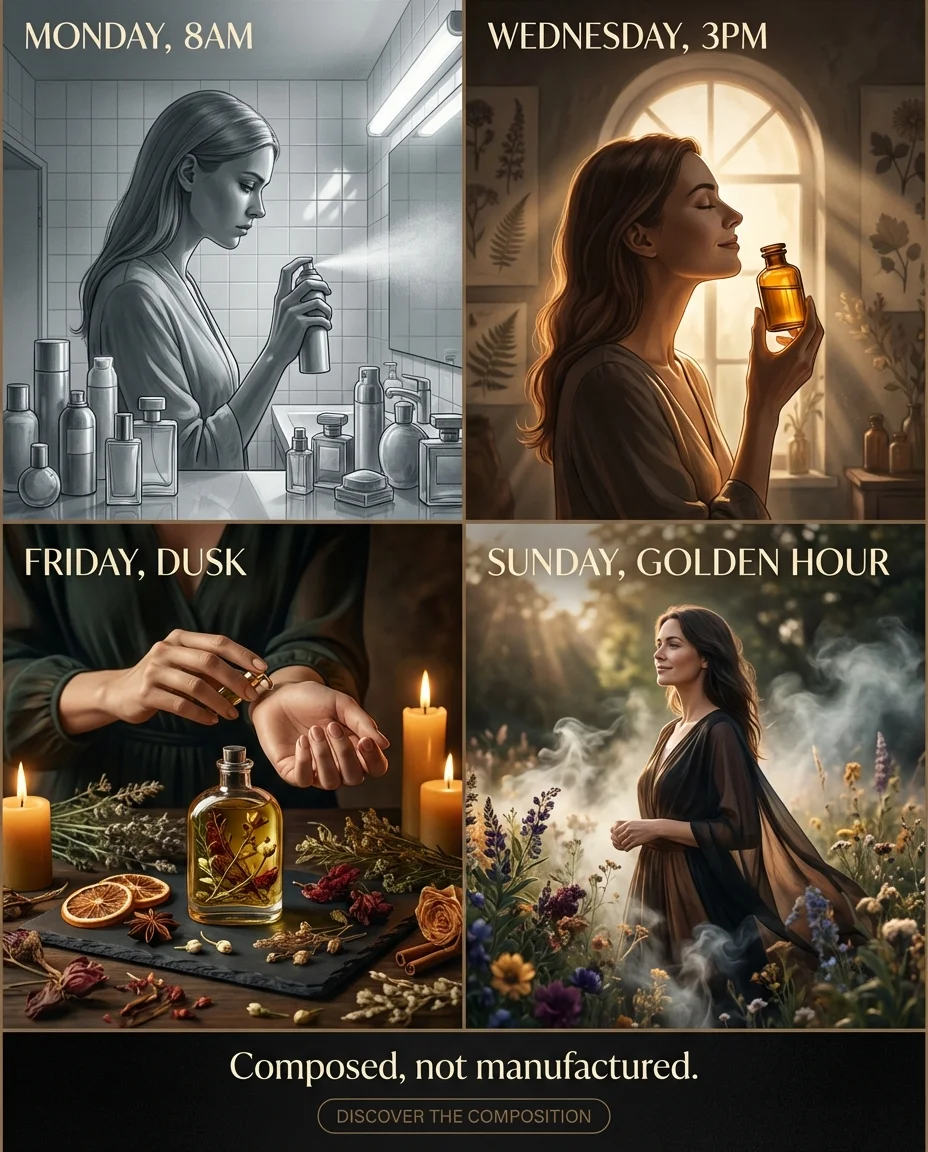
“When did you stop actually smelling your perfume?”
Noir Botanica
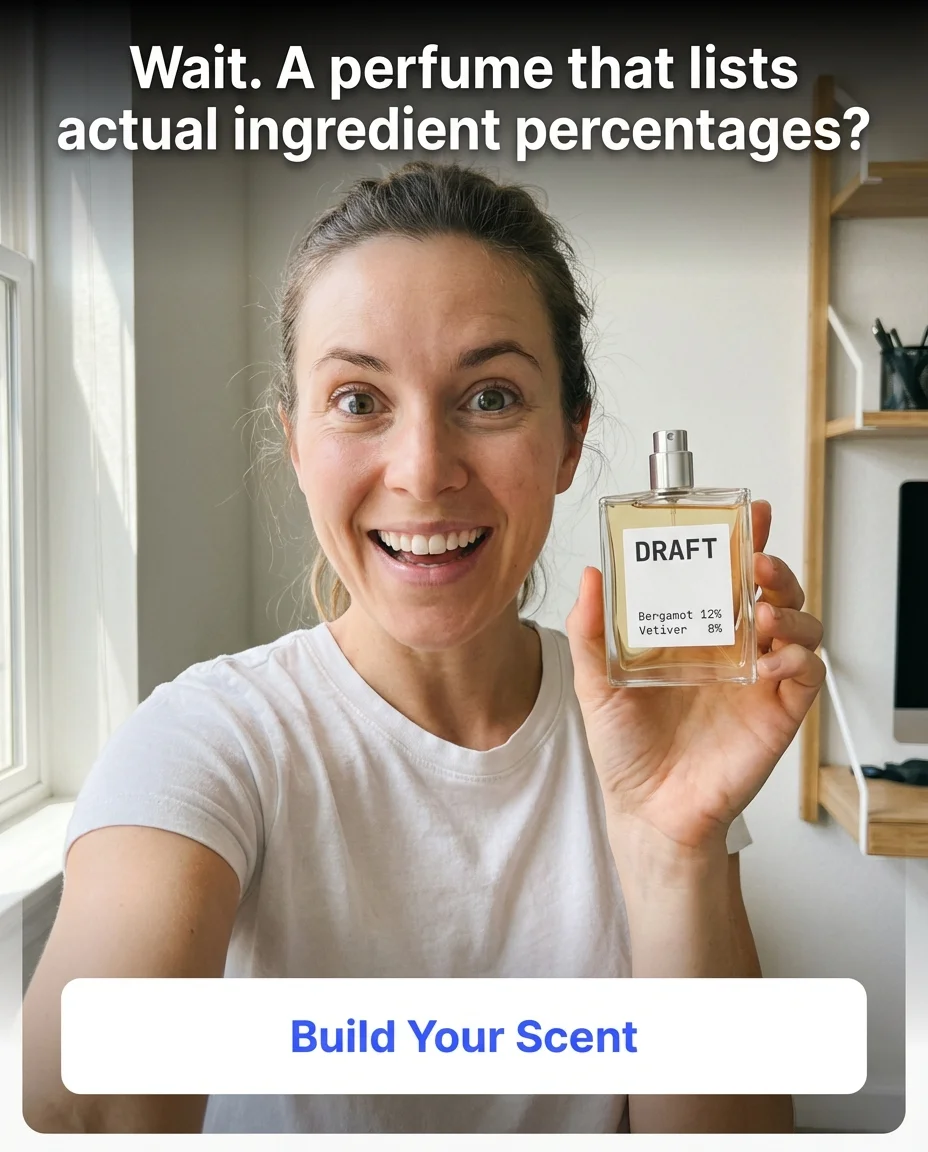
“Wait. A perfume that lists actual ingredient percentages?”
DRAFT
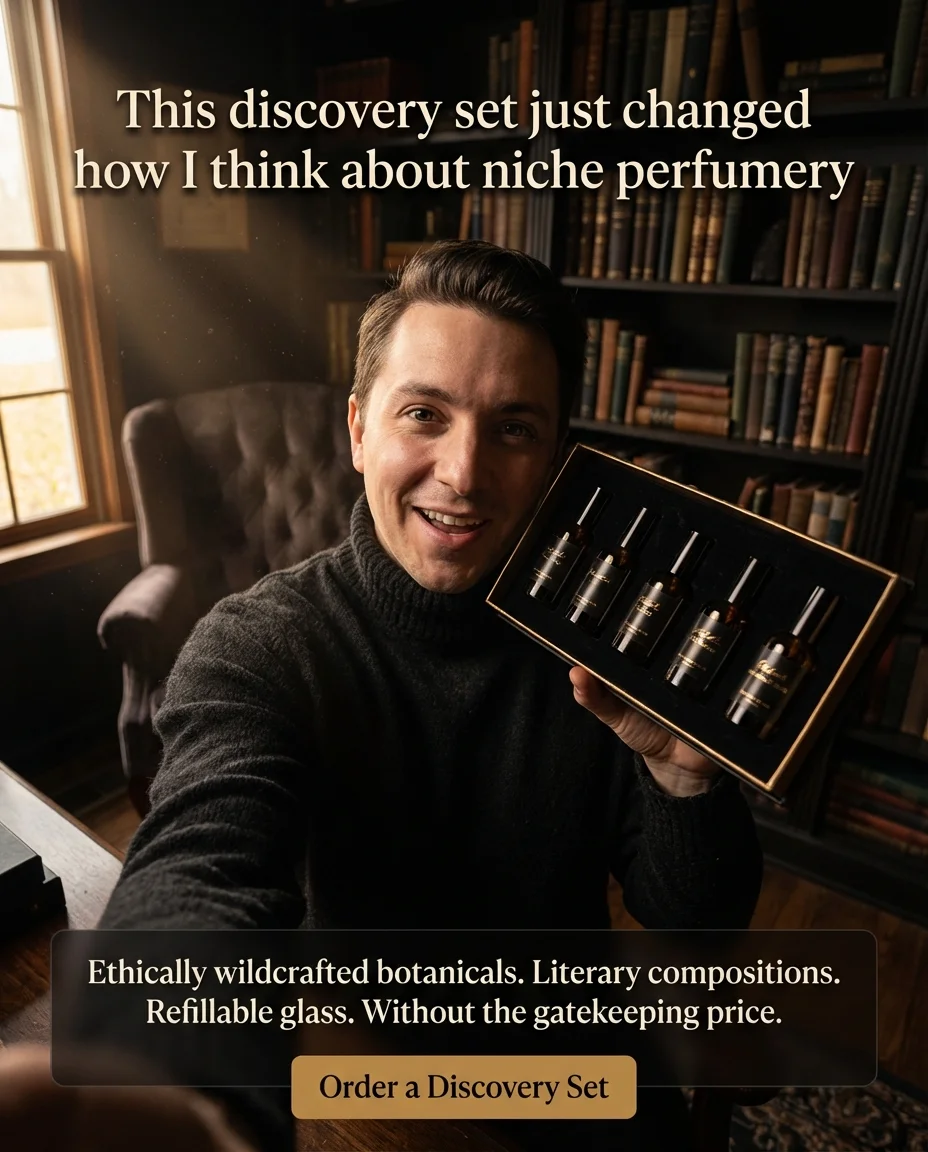
“This discovery set just changed how I think about niche perfumery”
Noir Botanica
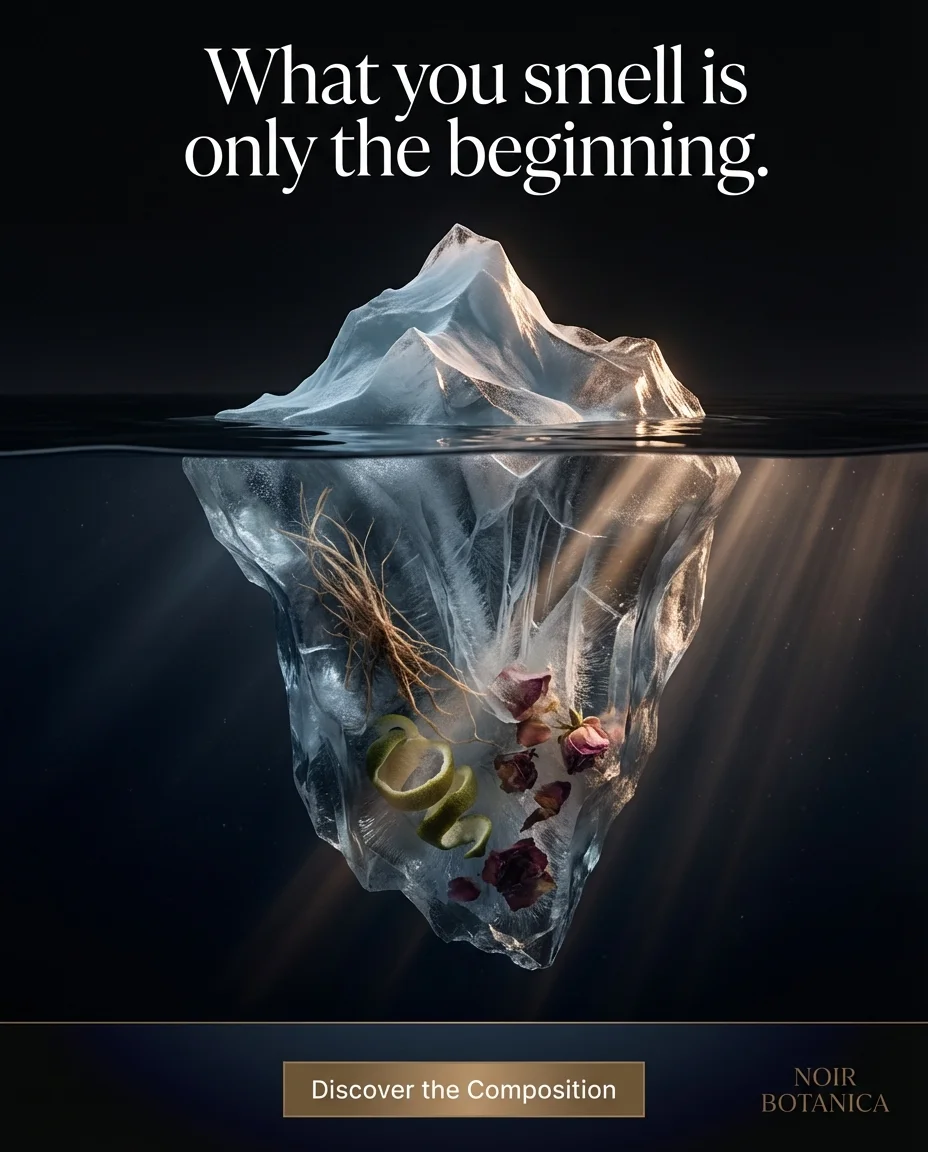
“What you smell is only the beginning.”
Noir Botanica
What works in perfume advertising
You can't smell an ad — so sell the feeling instead. Mood, memory, and emotion are your creative tools when the product is invisible.
Use evocative imagery that suggests scent: botanicals, smoke, rain on stone, leather, citrus peel. Visual metaphors bridge the sensory gap.
Discovery sets and samples should be the primary CTA, not full-size purchases. Fragrance is too personal for blind buying at full price.
Lean into the storytelling tradition of perfumery. Origin stories, ingredient sourcing journeys, and perfumer profiles build the narrative luxury demands.
User testimonials about how a fragrance made them feel or the compliments they received are more powerful than any product description.
Winning ad angles for perfume brands
Memory and emotion
'the smell of your grandmother's garden' or 'the moment after rain' connects scent to deeply personal experiences.
Ingredient transparency
challenge the industry norm of hiding behind 'fragrance' on ingredient labels.
Artisan craftsmanship
show the perfumer, the lab, the raw materials. Niche fragrance buyers value the maker's story.
Anti-mainstream positioning
for indie brands, contrast your approach with mass-market perfumery's focus on celebrity and trend-chasing.
Scent wardrobe concept
position fragrances as situational (date night, office, weekend) to drive multi-purchase behavior.
Common perfume ad mistakes
Relying on celebrity endorsements without a product story. Modern fragrance buyers want to know what's in the bottle, not just who's on the bottle.
Generic luxury imagery (gold, marble, silk) that says nothing about how the fragrance actually smells or feels.
Skipping the discovery phase. Asking someone to spend $150+ on a scent they've never experienced requires trust most ads don't build.
Describing scents in technical terms the audience doesn't understand. 'Oud and ambrette' means nothing to most people — 'warm, woody, and slightly sweet' does.
Ignoring the niche and artisan fragrance movement. The fastest-growing segment of perfumery is indie and niche, and these buyers reject mainstream advertising tactics.
Perfume ad creative checklist
Generate perfume ads for your brand
Tell Daily Ads about your product. Get scroll-stopping creatives in minutes — no designer needed.
Try Daily Ads Free